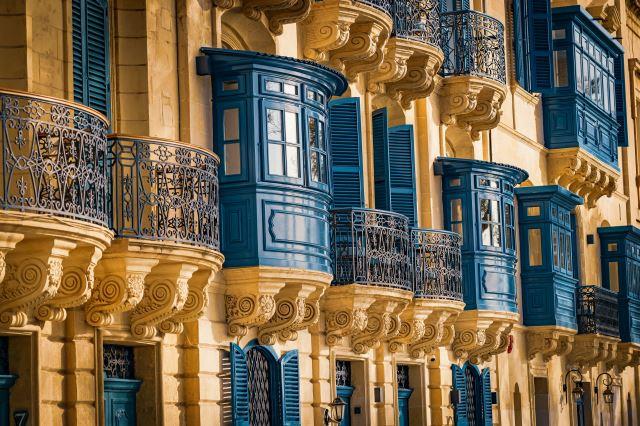
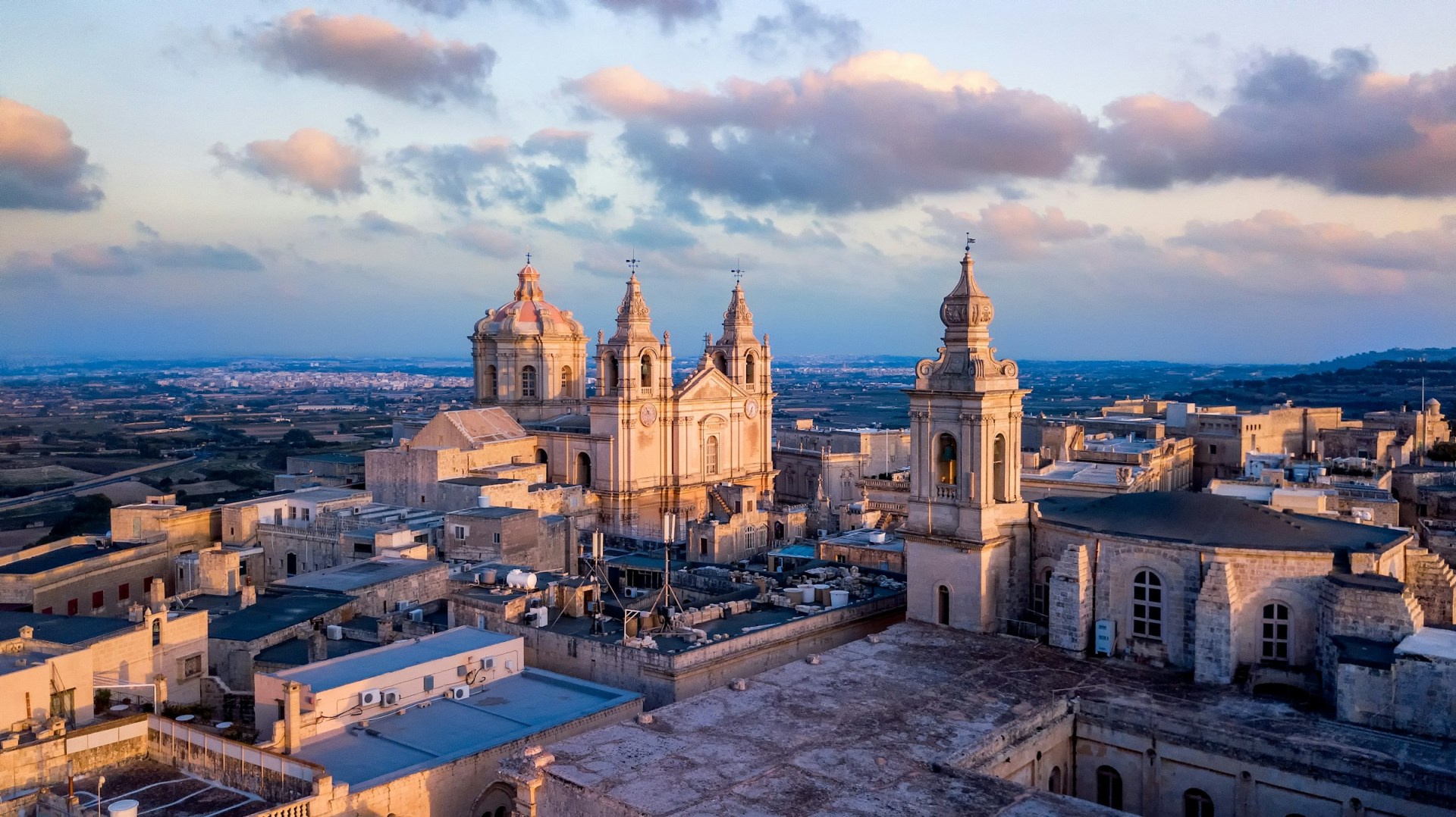

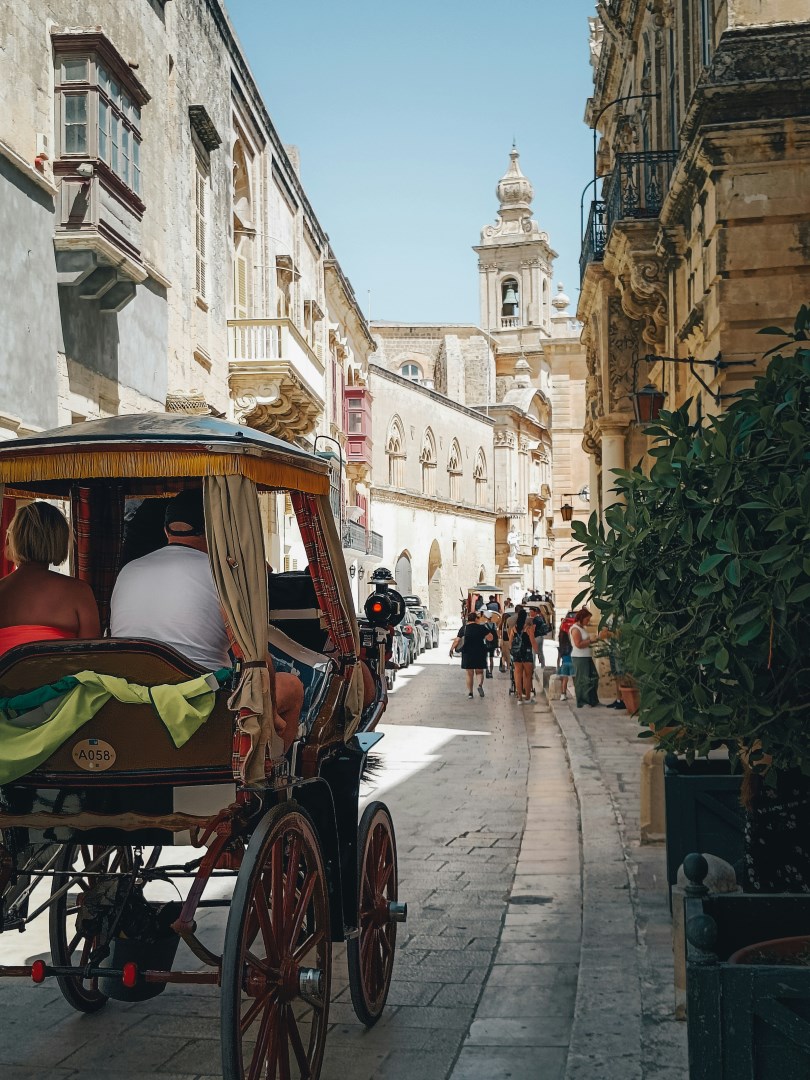
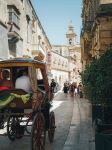
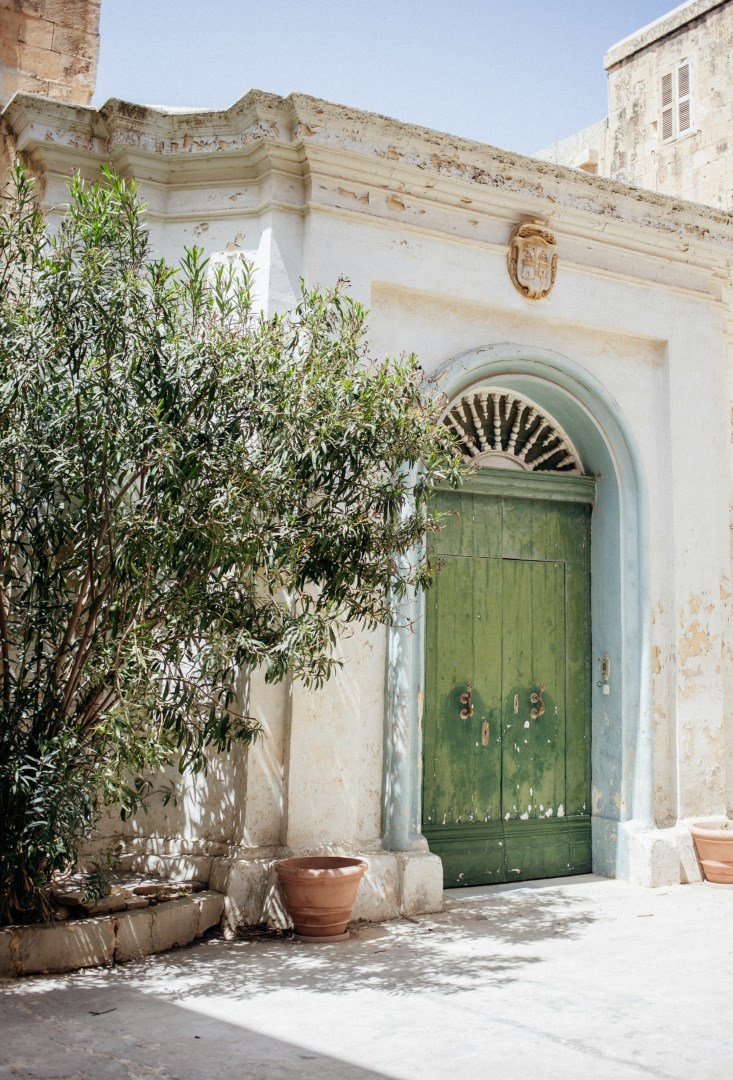
Mdina is a fortified hilltop city in central Malta, known as the Silent City for its quiet streets and enclosed historic character. The former capital occupies a limestone plateau above the surrounding countryside, with massive walls, narrow lanes, small squares, and honey-colored buildings creating a compact urban landscape. The main entrance leads toward Villegaignon Street and the center of the old city, where St Paul’s Cathedral dominates Cathedral Square. From the bastions, views extend across much of Malta, including the neighboring town of Rabat and the agricultural landscapes beyond.
Mdina’s cultural identity reflects the many civilizations that shaped Malta. The city occupies the site of ancient Melite, and its streets contain architectural traces associated with Roman, medieval, and later periods. St Paul’s Cathedral is one of its principal landmarks, while the Palazzo Falson Historic House preserves a collection of art, furniture, and objects within a medieval building. The city’s fortifications, palaces, churches, and courtyards illustrate Mdina’s long role as a center of Maltese political, religious, and aristocratic life before the capital moved to Valletta.
Within and around Mdina are several sites that reveal different aspects of Malta’s heritage. Palazzo Vilhena houses the National Museum of Natural History, with extensive collections covering the islands’ geology, wildlife, fossils, and marine life. Just outside the city walls, the Domvs Romana preserves intricate Roman mosaics and objects from an aristocratic townhouse, while nearby St Paul’s Catacombs form one of Malta’s largest complexes of underground burial sites. The city walls themselves provide elevated viewpoints, while the surrounding countryside contains fields, dry-stone walls, and the limestone landscape characteristic of central Malta.
Mdina’s food traditions are part of the wider Maltese culinary culture shared with neighboring Rabat. Local specialties include pastizzi, savory pastries filled with ricotta or seasoned pea paste, and imqaret, pastries filled with dates and flavored with spices. Rabbit is another well-known Maltese dish, commonly prepared as stuffat tal-fenek, a slow-cooked rabbit stew. The narrow streets of Mdina contain restaurants, cafés, and bakeries where Maltese dishes can be sampled alongside local wines. The city also has an unusual connection with natural history through Palazzo Vilhena, whose museum collection includes thousands of specimens of Maltese flora, fauna, minerals, fossils, and shells.
Other Popular Destinations in Malta